

Every year thousands of students receive MBA admits from the world’s top business schools such as Harvard Business School, Stanford GSB, Wharton, Kellogg, Chicago Booth, Columbia, MIT Sloan, and Yale SOM.
These programs offer unmatched global opportunities, but the cost of attendance can often exceed $200,000 for the full MBA program.
Because of this, choosing the right MBA education loan strategy becomes extremely important.
In this guide, we explain the four major education loan options available for students admitted to top US MBA programs, along with a comparison of their real costs.
Top MBA Programs Students Commonly Target
Students admitted to elite MBA programs usually come from schools like:
M7 Business Schools
- Harvard Business School
- Stanford Graduate School of Business
- Wharton (University of Pennsylvania)
- Kellogg (Northwestern University)
- Chicago Booth
- Columbia Business School
- MIT Sloan
Other Top US MBA Programs
- Yale School of Management
- Duke Fuqua
- Darden (University of Virginia)
- NYU Stern
- UCLA Anderson
- Berkeley Haas
Students admitted to these programs generally explore four major loan options.
1. College Affiliated Loans for MBA Programs
Many US universities provide preferred loan programs through partner credit unions or institutional lenders.
These loans are specifically designed for MBA students admitted to that school.
Examples include:
Harvard Business School
Harvard MBA students can access loans through Harvard University Employees Credit Union (HUECU).
Typical features
- Interest Rate: ~6.5% – 7%
- Processing Fee: Minimal or none
- Loan Coverage: Up to full cost of attendance
- Co-Signer: Usually not required
Stanford Graduate School of Business
Stanford partners with Star One Credit Union for MBA financing.
Typical terms
- Interest Rate: ~6.5% – 7%
- Co-Signer: Not required in most cases
- Coverage: Tuition + living expenses
- Flexible repayment options
Wharton School – University of Pennsylvania
Wharton offers a school-supported MBA loan structure.
Typical structure
- Interest Rate: ~6.5% – 7%
- Processing Fee: Low or none
- Co-Signer: Optional
- Loan Coverage: Full cost of attendance
Kellogg School of Management – Northwestern University
Kellogg provides access to the NU Loan Program.
Typical terms
- Interest Rate: ~6.5% – 7%
- Processing Fee: Minimal
- Co-Signer: Not required in most cases
These institutional loans are convenient but may not always provide the lowest cost of borrowing.
2. US Co-Signer Education Loan (Most Cost Effective Option)
A US co-signer loan is one of the most competitive funding options available for international MBA students.
In this structure, a US citizen or green card holder acts as a co-signer, which allows lenders to offer significantly lower interest rates.
Key Advantages
- Interest rates starting from 2.79%
- Zero processing fee
- No forex charges
- No insurance requirement
- Flexible tenure options
Another major advantage is that students can build US credit history early, which becomes useful after graduation.
Read more about US Co-Signer Education Loans, eligibility requirements, interest rates, and benefits in our complete guide:- US Co-Signer Education Loan (2.79% Interest) – Complete 2026 Guide
3. Indian Bank Education Loans (INR Loans)
Indian banks provide education loans under two structures.
Collateral Education Loan (With Property)
In this loan structure students pledge property as collateral.
Typical terms
- Interest Rate: Starting around 8%
- Loan Amount: Based on property valuation
- Financing: Up to 80% of property value
Additional costs
- Processing fee
- Loan insurance
- Forex charges
However students receive tax benefits under Section 80E.
Non-Collateral Education Loan (Without Property)
Students may also obtain unsecured loans through banks or NBFCs.
Typical structure
- Interest Rate: Starting around 9.75%
- Maximum loan amount: Up to ₹2 Crore
- Processing fee: 1% + GST (negotiable)
Additional charges include
- Forex charges
- Insurance costs
Loan approval depends on
- Student academic profile
- University ranking
- Co-applicant income
4. No Co-Signer International Loans (Prodigy Finance / MPOWER)
Students without collateral or a US co-signer can use global lenders.
Prodigy Finance
Prodigy offers loans for students admitted to top global universities.
Typical terms
- Interest Rate: Starting around 10.99%
- Processing Fee: 5% of disbursed amount
- Sanction Letter Fee: $500
No co-signer is required. Completely depend on Student profile
MPOWER Financing
MPOWER also provides loans without collateral or co-signer.
Typical features
- Loan Cap: Around $100,000
- Processing Fee: 5% on disbursement
- Free sanction letter
However interest rates are generally higher compared to other options.
MBA Loan Cost Comparison Example ($100,000 Loan)
Below is a simplified comparison assuming a 10-year repayment period.
| Loan Type | Interest Rate | Estimated Total Interest | Approx Total Repayment |
|---|---|---|---|
| US Co-Signer Loan | 4% | ~$21,600 | ~$121,600 |
| College Affiliated Loan | 7% | ~$39,500 | ~$139,500 |
| Indian Collateral Loan | 8% | ~$45,500 | ~$145,500 |
| Indian Non-Collateral Loan | 9.75% | ~$57,200 | ~$157,200 |
| Prodigy Finance | 10.99% | ~$66,400 | ~$166,400 |
| MPOWER Financing | 11.5% | ~$70,900 | ~$170,900 |
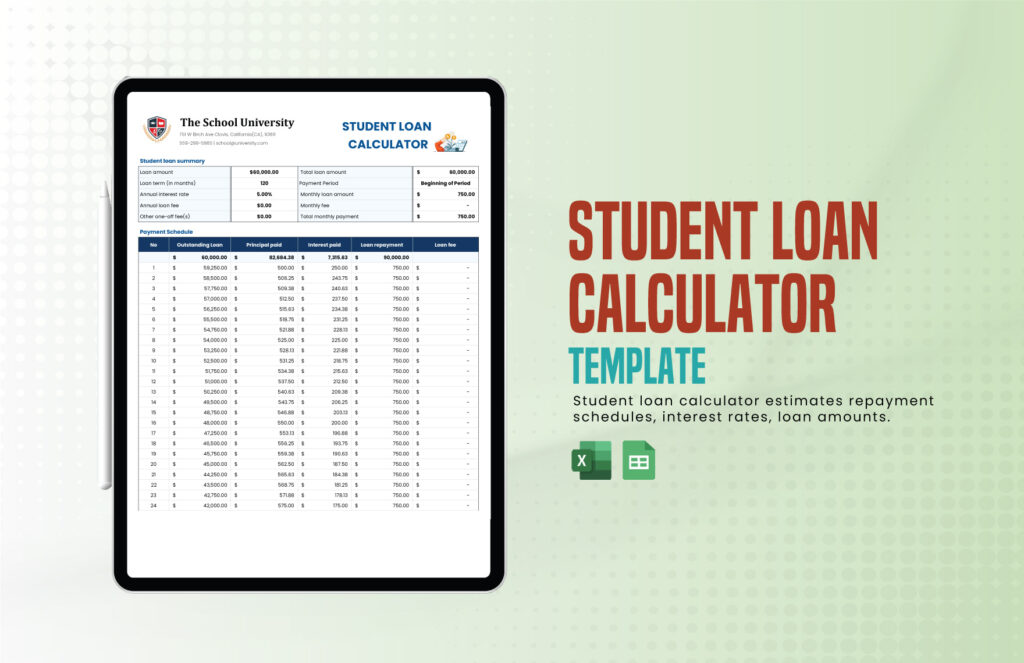
This comparison clearly shows how interest rate differences significantly impact the total cost of borrowing.
Even a 3–4% interest difference can increase repayment by $30,000 to $50,000 over time.
You can also read our detailed comparison of US loans, Indian education loans, and no-co-signer loan options here: – US Co-Signer Loan (2.79%) vs Indian & Non Co-Signer Loans – 2026 Comparison
How Aspiro Global Finance Helps MBA Students
At Aspiro Global Finance, we help students identify the most cost-effective loan structure for their MBA.
Our services include
- Comparing US lenders vs Indian lenders
- Helping structure US co-signer loan applications
- Negotiating better interest rates
- Avoiding unnecessary processing and forex charges
- Offering 0.25% cashback on accepted loan cases
Our goal is to ensure students choose the lowest cost loan option available.
If you would like help comparing MBA loan options, contact our team here.
Final Thoughts
An MBA from top schools like Harvard, Stanford, Wharton, Chicago Booth, Columbia, MIT Sloan, or Yale SOM can transform your career.
However choosing the right loan structure is just as important as securing admission.
By carefully comparing college affiliated loans, US co-signer loans, Indian bank loans, and global lenders, students can significantly reduce their long-term financial burden.
If you have received an MBA admit and want help selecting the best education loan structure, Aspiro Global Finance can help you evaluate and secure the most suitable option
Choosing the right MBA education loan can significantly reduce the total cost of financing an MBA in the USA.
MBA Education Loan for USA – FAQs
1. What is the best loan option to finance an MBA in the USA?
Students usually consider four options: college-affiliated loans, US co-signer education loans, Indian bank education loans, and global lenders like Prodigy or MPOWER. Among these, US co-signer loans often offer the lowest interest rates starting from around 2.79%, making them one of the most cost-effective options.
2. Do MBA students need a co-signer for education loans in the USA?
Not always. Some college-affiliated loans at top MBA schools may not require a co-signer. However, US co-signer loans require a US citizen or green card holder, which helps students secure lower interest rates and better loan terms.
3. Can international students get an MBA loan without collateral?
Yes. International students can apply for no-collateral loan options such as US co-signer loans, Prodigy Finance, or MPOWER Financing. Approval usually depends on the university ranking, student profile, and future earning potential.
4. How much loan is required for an MBA in top US business schools?
The total cost of an MBA at schools like Harvard, Stanford, Wharton, or Chicago Booth typically ranges between $180,000 and $220,000, including tuition, living expenses, and insurance.
5. Which MBA loan option has the lowest interest rate?
Among common options, US co-signer education loans usually offer the lowest interest rates, starting from around 2.79% depending on the co-signer’s credit profile.
Related Reading from Aspiro Global Finance
US Co-Signer Education Loan Guide — Explore competitive loan options for MBA programs.
US Co-Signer Loan vs Indian & No-Co-Signer Loans — Compare funding solutions available to MBA applicants.
Living Expenses in USA for Indian Students — Estimate the full cost of attendance beyond tuition fees.
Proof of Funds for USA Visa — Learn how to prepare financial documentation for visa interviews.
I-20 Amount Explained — Understand the university-issued financial requirement for your MBA program.
Fall 2026 US Visa Crisis — Important visa preparation insights for future MBA students.